COMMON WEAKNESS ENUMERATIONDraft

CWE-307

Improper Restriction of Excessive Authentication Attempts

The product does not implement sufficient measures to prevent multiple failed authentication attempts within a short time frame.

Abstraction

Base

Structure

Simple

Likelihood of Exploit

Medium

Understand the problem

What is the problem?

The product does not implement sufficient measures to prevent multiple failed authentication attempts within a short time frame.

Root cause

How and when does the problem arise?

Lifecycle phase

Architecture and Design

COMMISSION: This weakness refers to an incorrect design related to an architectural security tactic.

Risk

What does successful exploitation lead to?

Bypass Protection Mechanism

Affected security scopes: Access Control

An attacker could perform an arbitrary number of authentication attempts using different passwords, and eventually gain access to the targeted account using a brute force attack.

Defence

How is it prevented and fixed?

Architecture and Design

Architecture and design approach

Detail
Common protection mechanisms include: - Disconnecting the user after a small number of failed attempts - Implementing a timeout - Locking out a targeted account - Requiring a computational task on the user's part.

Architecture and Design

Libraries or Frameworks

Detail
Use a vetted library or framework that does not allow this weakness to occur or provides constructs that make this weakness easier to avoid [REF-1482]. Consider using libraries with authentication capabilities such as OpenSSL or the ESAPI Authenticator. [REF-45]

Verification

How is it detected?

Dynamic Analysis with Automated Results Interpretation

High
According to SOAR [REF-1479], the following detection techniques may be useful: ``` Highly cost effective: ``` Web Application Scanner Web Services Scanner Database Scanners ``` Cost effective for partial coverage: ``` Host-based Vulnerability Scanners - Examine configuration for flaws, verifying that audit mechanisms work, ensure host configuration meets certain predefined criteria

Dynamic Analysis with Manual Results Interpretation

High
According to SOAR [REF-1479], the following detection techniques may be useful: ``` Highly cost effective: ``` Fuzz Tester Framework-based Fuzzer ``` Cost effective for partial coverage: ``` Forced Path Execution

Manual Static Analysis - Source Code

High
According to SOAR [REF-1479], the following detection techniques may be useful: ``` Highly cost effective: ``` Focused Manual Spotcheck - Focused manual analysis of source Manual Source Code Review (not inspections)

Automated Static Analysis - Source Code

SOAR Partial
According to SOAR [REF-1479], the following detection techniques may be useful: ``` Cost effective for partial coverage: ``` Source code Weakness Analyzer Context-configured Source Code Weakness Analyzer

Automated Static Analysis

SOAR Partial
According to SOAR [REF-1479], the following detection techniques may be useful: ``` Cost effective for partial coverage: ``` Configuration Checker

Architecture or Design Review

High
According to SOAR [REF-1479], the following detection techniques may be useful: ``` Highly cost effective: ``` Formal Methods / Correct-By-Construction ``` Cost effective for partial coverage: ``` Inspection (IEEE 1028 standard) (can apply to requirements, design, source code, etc.)

MITRE diagram

Weakness relationships and flow
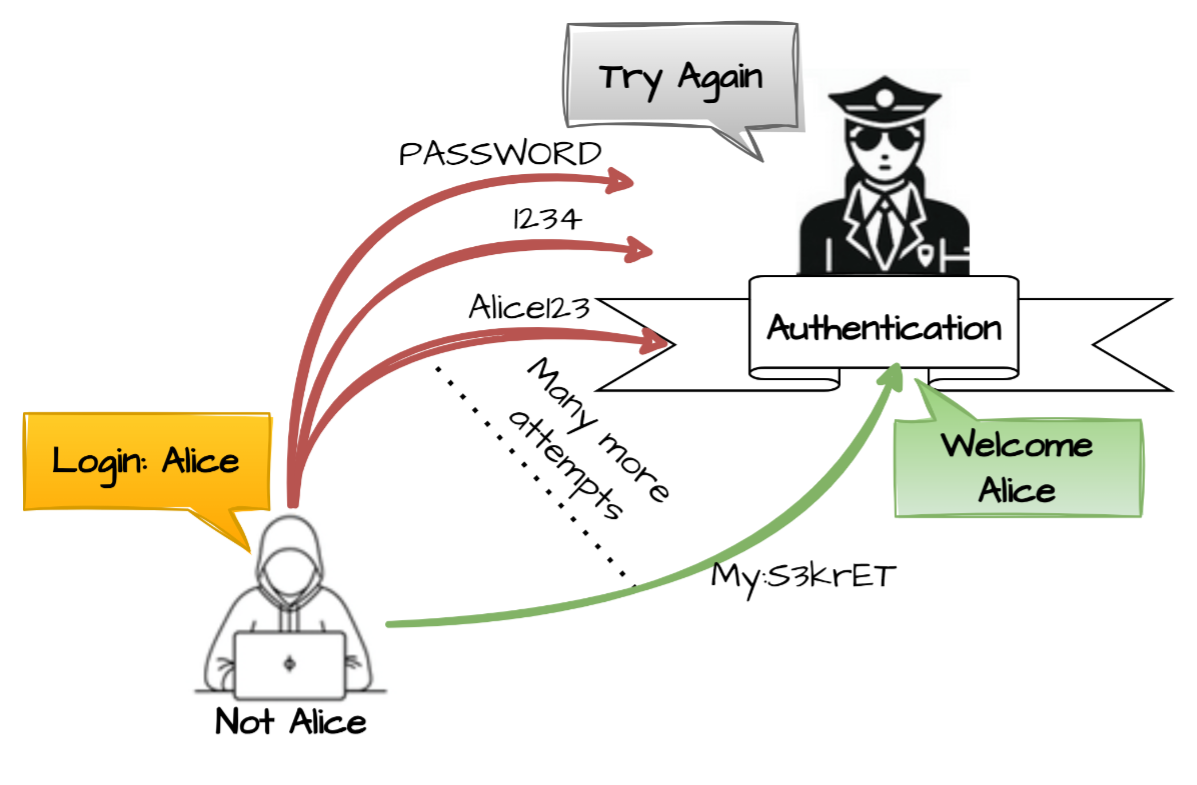
CWE-307 MITRE diagramı