COMMON WEAKNESS ENUMERATIONDraft

CWE-201

Insertion of Sensitive Information Into Sent Data

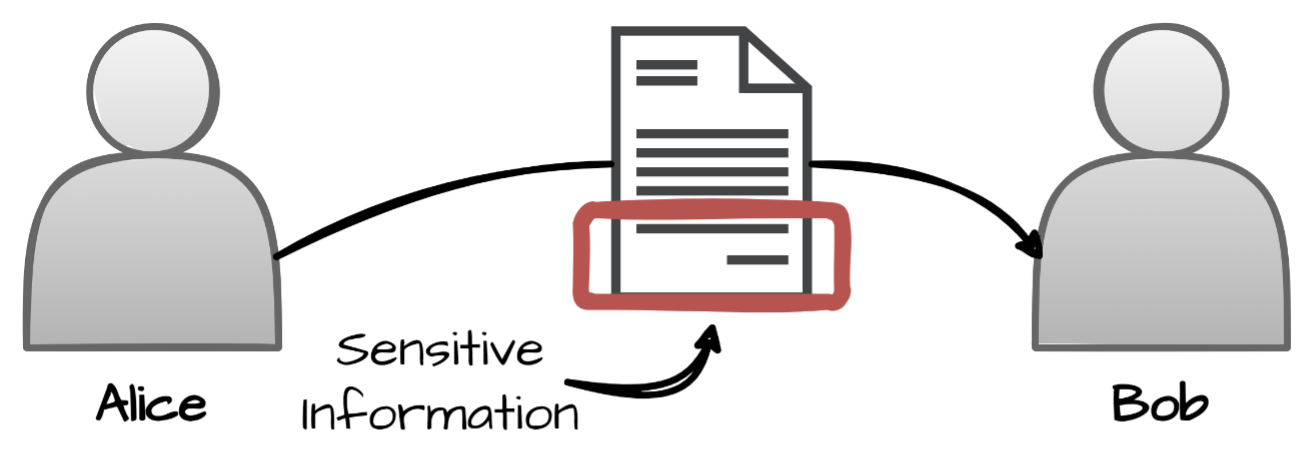
The code transmits data to another actor, but a portion of the data includes sensitive information that should not be accessible to that actor.

Abstraction

Base

Structure

Simple

Likelihood of Exploit

Medium

Understand the problem

What is the problem?

The code transmits data to another actor, but a portion of the data includes sensitive information that should not be accessible to that actor.

Root cause

How and when does the problem arise?

Lifecycle phase

Architecture and Design

Lifecycle phase

Implementation

REALIZATION: This weakness is caused during implementation of an architectural security tactic.

Risk

What does successful exploitation lead to?

Read Files or DirectoriesRead MemoryRead Application Data

Affected security scopes: Confidentiality

Sensitive data may be exposed to attackers.

Defence

How is it prevented and fixed?

Requirements

Security requirement

Detail
Specify which data in the software should be regarded as sensitive. Consider which types of users should have access to which types of data.

Implementation

Implementation-phase defence

Detail
Ensure that any possibly sensitive data specified in the requirements is verified with designers to ensure that it is either a calculated risk or mitigated elsewhere. Any information that is not necessary to the functionality should be removed in order to lower both the overhead and the possibility of security sensitive data being sent.

System Configuration

Secure configuration approach

Detail
Setup default error messages so that unexpected errors do not disclose sensitive information.

Architecture and Design

Separation of Privilege

Detail
Compartmentalize the system to have "safe" areas where trust boundaries can be unambiguously drawn. Do not allow sensitive data to go outside of the trust boundary and always be careful when interfacing with a compartment outside of the safe area. Ensure that appropriate compartmentalization is built into the system design, and the compartmentalization allows for and reinforces privilege separation functionality. Architects and designers should rely on the principle of least privilege to decide the appropriate time to use privileges and the time to drop privileges.

Verification

How is it detected?

Automated Static Analysis

High
Automated static analysis, commonly referred to as Static Application Security Testing (SAST), can find some instances of this weakness by analyzing source code (or binary/compiled code) without having to execute it. Typically, this is done by building a model of data flow and control flow, then searching for potentially-vulnerable patterns that connect "sources" (origins of input) with "sinks" (destinations where the data interacts with external components, a lower layer such as the OS, etc.)

MITRE diagram

Weakness relationships and flow
CWE-201 MITRE diagramı